Medieval Herbalist Junk Journal Pages: A Curated Guide to Renaissance-Inspired Digital Art
The resurgence of interest in tactile, analog creativity has brought junk journaling back into the spotlight. For enthusiasts who value historical aesthetics and botanical accuracy, finding high-quality digital assets that avoid cliché designs can be challenging. The Medieval Herbalist Junk Journal Pages collection offers a distinct alternative to standard vintage clipart, drawing specifically from the visual language of the Italian Renaissance. This set provides fifty unique, high-resolution pages designed for those who appreciate the serene elegance of classical still life painting combined with the practical utility of modern digital downloads.
Understanding whether this specific aesthetic aligns with your creative projects requires looking beyond the surface imagery. It involves evaluating texture quality, thematic consistency, and how these elements compare to other popular vintage styles available in the digital marketplace.
Defining the Aesthetic: Beyond Standard Vintage
Many digital paper packs labeled as "vintage" rely heavily on Victorian florals or shabby chic pastels. In contrast, the Medieval Herbalist collection anchors itself in an earlier, more structured period. The design philosophy mirrors the composition of Italian oil paintings, characterized by a soft yet earthy palette of sage green, terracotta, ivory, and antique gold. This color scheme is not merely decorative; it evokes the natural dyes and materials available during the Renaissance, offering a grounded, organic feel that differs significantly from the brighter, sharper tones of later historical periods.
The inclusion of authentic crackle textures throughout the pages is a critical differentiator. Rather than applying a uniform filter, the textures mimic the aging process of oil on canvas and parchment. This attention to detail ensures that when printed, the pages possess a tactile depth that flat digital images often lack. For artists engaged in mixed media work, this pre-aged look reduces the need for extensive distressing techniques, allowing for a more streamlined workflow while maintaining an appearance of heritage and age.
Thematic Elements and Visual Composition
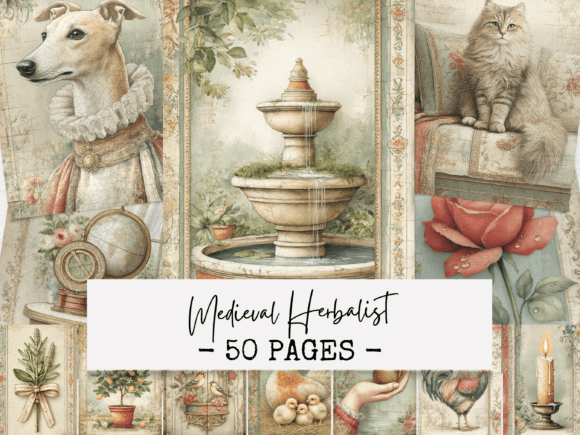
The content within the fifty pages is carefully curated to support a narrative of apothecary and garden life. The imagery extends beyond simple floral patterns to include detailed botanical studies. You will find detailed botanical roses with dewdrops, potted citrus trees in terracotta urns, and hands holding eggs and fresh herbs. These elements are rendered with the precision of scientific illustration but softened by the painterly style of the era.
Animal motifs play a significant role in establishing the mood. Unlike the whimsical or cartoonish animals found in some craft supplies, this collection features noble greyhounds and whippets in Renaissance collars, as well as elegant Persian cats on velvet cushions. These depictions reflect the status symbols of the time, adding a layer of historical authenticity. Additionally, charming songbirds on flowering branches and farmyard scenes with chicks and roosters provide lighter, pastoral touches that balance the more formal botanical illustrations.
Architectural and scholarly elements further enrich the collection. Classical stone fountains with trailing ivy, vintage globes, and astrolabes suggest a connection between nature and knowledge. This combination makes the pages suitable not only for gardening journals but also for projects related to history, science, or literature. The ornate floral borders and embroidered frames serve as natural focal points, guiding the eye and providing structured spaces for text or additional collage elements.
Comparing Formats: Digital Downloads vs. Physical Papers
When deciding between purchasing physical vintage papers and digital downloads like the Medieval Herbalist Junk Journal Pages, several factors come into play. Physical papers offer immediate texture and weight, which some artists prefer. However, they are finite resources; once a sheet is used, it is gone. Digital files, provided at high resolution (300 DPI), offer unlimited reproducibility. You can print the same page multiple times, experiment with different paper weights, or resize elements without losing clarity.
The tradeoff lies in the printing process. To achieve the intended effect, users must invest in quality inkjet or laser printers and select appropriate paper stocks. Heavyweight cardstock or textured art paper is recommended to complement the crackle textures and prevent ink bleeding. For those without access to reliable printing equipment, the initial convenience of physical papers may seem appealing. Yet, for serious journalers who produce work regularly, the cost-per-page of digital downloads is significantly lower over time.
Furthermore, digital formats allow for greater flexibility in manipulation. Users can isolate specific elements—such as a single rose or a greyhound—and incorporate them into other digital projects, such as invitations or greeting cards. This versatility extends the value of the collection beyond traditional junk journaling into broader graphic design applications.
Ideal Use Cases and Project Suitability
This collection is particularly well-suited for specific types of creative endeavors. Its strengths lie in projects that benefit from a cohesive, historical narrative. For example, creating a herb garden logbook becomes an immersive experience when the pages themselves reflect the subject matter. Similarly, memory keeping for travels to Italy or visits to botanical gardens gains resonance through the use of thematically aligned backgrounds.
- Junk Journals and Art Journals: The varied layouts provide ready-made backgrounds that require minimal embellishment.
- Botanical and Garden Themed Projects: The accurate plant illustrations make these pages ideal for pressing flowers or documenting plant growth.
- Renaissance and Classical Crafts: Educators or historical reenactors may use these prints for props, educational materials, or decorative accents.
- Scrapbooking and Memory Keeping: The neutral yet rich color palette complements photographs without overpowering them.
- Card Making and Invitations: Individual elements can be extracted for elegant, old-world stationery designs.
- Decoupage and Collage Art: The high resolution ensures crisp edges when cutting out intricate details like astrolabes or bird feathers.
However, it is important to recognize limitations. If your project requires a bright, modern, or minimalist aesthetic, the ornate and textured nature of these pages may clash. They are best used when the goal is to evoke warmth, history, and natural beauty. Additionally, while the crackle texture adds character, it may not be suitable for documents requiring high legibility of small text printed directly over busy areas. In such cases, using the pages as background layers with overlaid solid-colored text boxes is a prudent approach.
Evaluating Quality and Technical Specifications
The technical quality of digital assets is paramount for professional-looking results. The Medieval Herbalist Junk Journal Pages are delivered as fifty JPG files at 300 DPI. This resolution is the industry standard for print-ready quality, ensuring that images remain sharp even when printed at larger sizes. The file format is universally compatible with most image editing and word processing software, reducing barriers to entry for users with varying levels of technical expertise.
Instant digital download capability means there is no waiting period for shipping, allowing for immediate project initiation. This is particularly advantageous for last-minute gift creation or urgent craft deadlines. However, users should ensure they have adequate storage space and a reliable backup system, as digital files can be lost if not properly managed.
Making the Right Choice for Your Creative Practice
Choosing the right digital paper collection depends on your specific artistic goals and existing resources. If you are drawn to the tranquility of Renaissance gardens and appreciate the nuanced interplay of light and texture in oil painting, this collection offers a refined option. It stands apart from generic vintage packs through its thematic coherence and attention to historical detail.
Consider your current toolkit. Do you have access to a quality printer? Are you comfortable working with digital files? If so, the flexibility and depth of the Medieval Herbalist pages can enhance your creative output significantly. Conversely, if you prefer the immediacy of physical materials or require a more contemporary look, other options may better serve your needs.
Ultimately, the value of this collection lies in its ability to transport the user to a Renaissance apothecary garden with every page turn. It invites a slower, more contemplative approach to journaling, where the act of creation is as much about appreciating beauty as it is about recording thoughts. For those seeking to infuse their projects with a sense of timeless elegance and botanical wonder, these pages provide a sophisticated foundation.